


Leica M125 C, M205 C, and M205 Microscopes
Encoded Stereo Microscopes
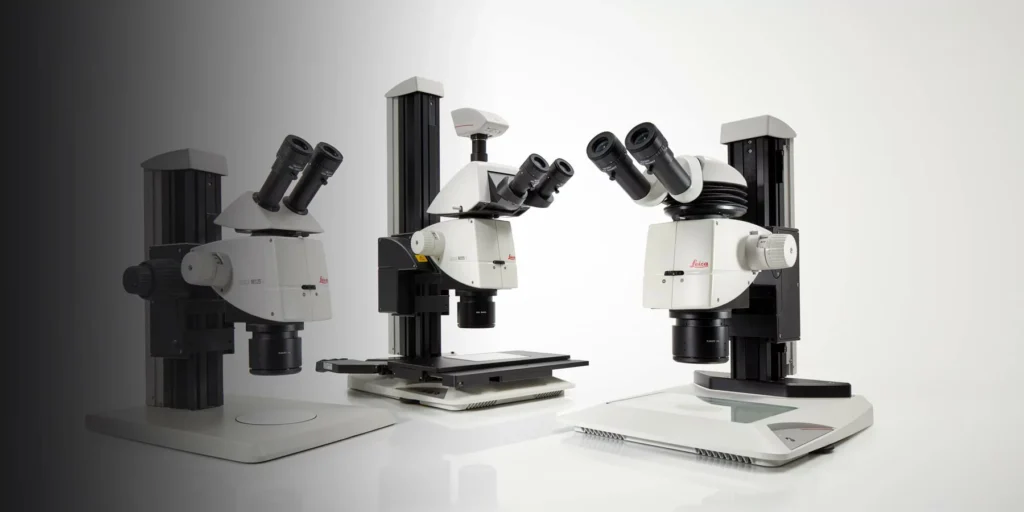
Leica M125 C, M205 C and M205 A encoded stereo microscopes are high‑performance systems designed to deliver reproducible, calibrated 3D images for demanding inspection and research tasks. They combine encoded zoom with apochromatic optics, wide magnification ranges and, on M205 models, FusionOptics technology for both high resolution and large depth of field. The M205 A adds full motorization and automation, making it especially suited to repetitive workflows that require consistent results with minimal manual adjustment.
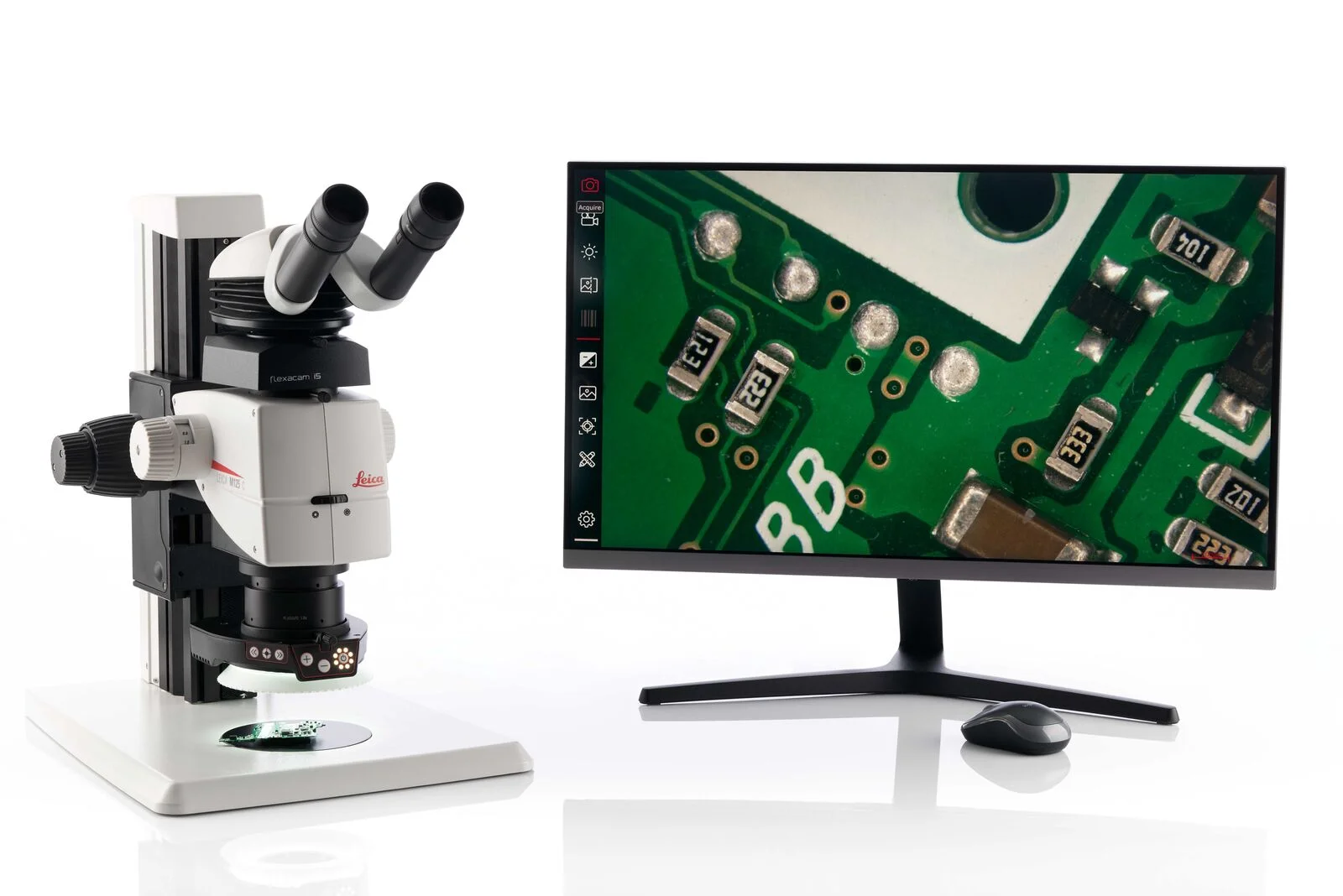
Leica M125 C
Encoded
Everyday precision stereo microscope
Encoded zoom and apochromatic optics make M125 C a reliable workhorse for routine but critical inspections
where clear 3D images and scale‑correct documentation are important.
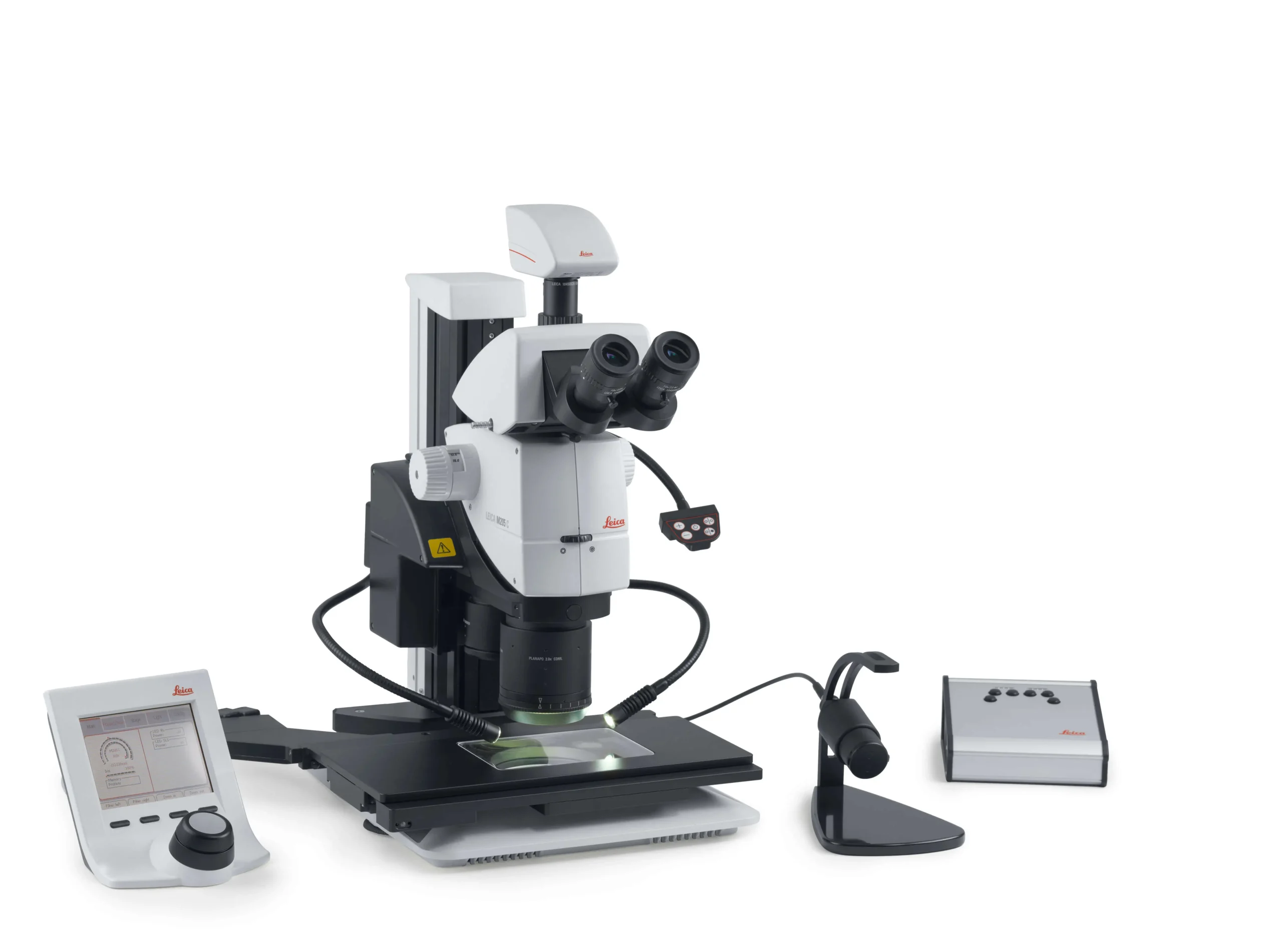
Leica M205 C
FusionOptics
High‑resolution FusionOptics stereo microscope
M205 C combines a wide 20.5:1 zoom with FusionOptics to deliver very high resolution and depth of field,
ideal for applications where the finest surface details must remain sharply visible.
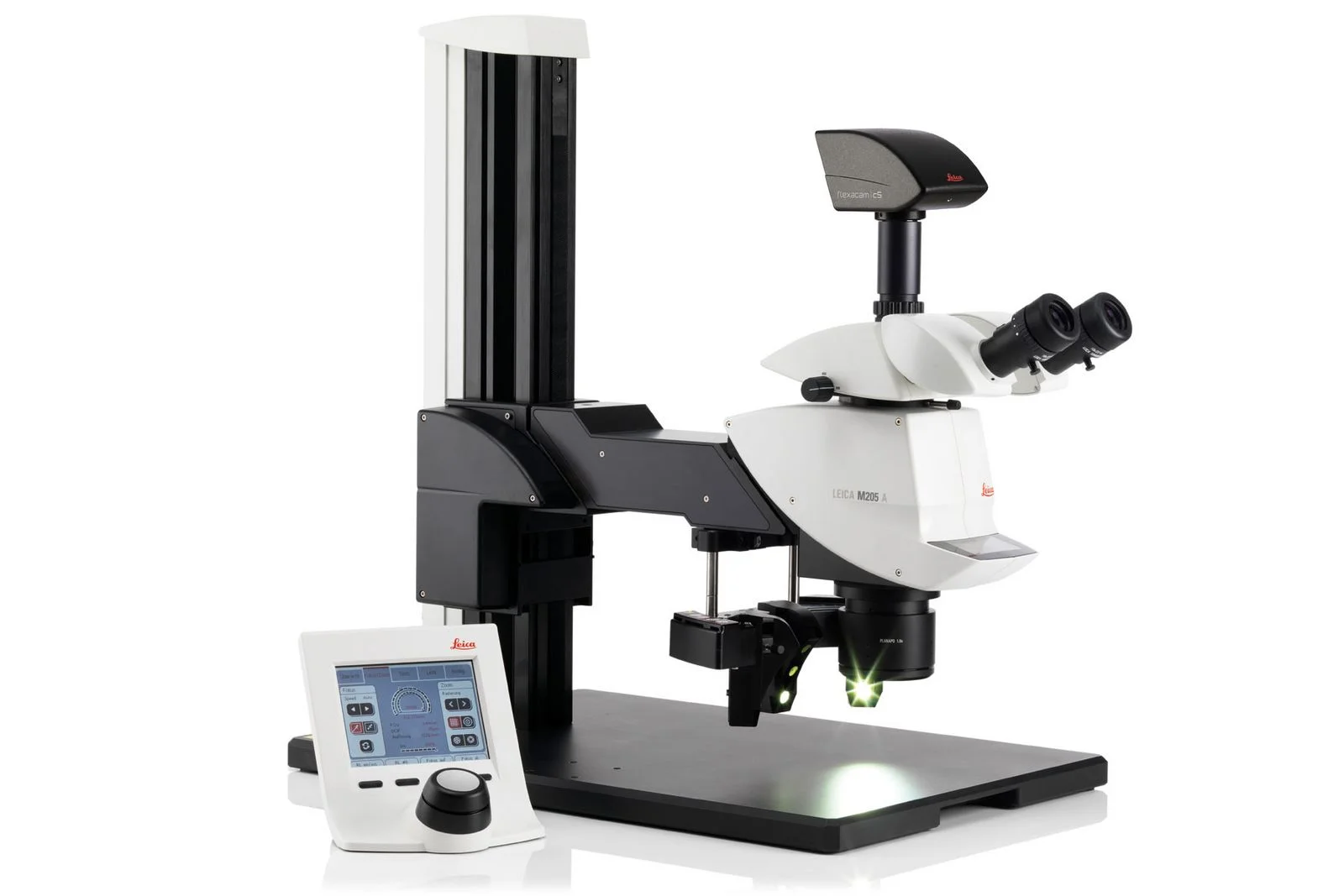
Leica M205 A
Motorized
Automated FusionOptics stereo microscope
With motorized zoom and focus on the same FusionOptics platform, M205 A supports automated routines
and repeatable imaging, helping standardize complex QA or R&D workflows.
Technical Specifications of Encoded Stereo Microscopes
Leica M125 C
Research stereo zoom
Zoom ratio
12.5 : 1
Wide zoom span for routine to detailed stereo work.
Typical zoom range
Approx. 8× – 100×
Total magnification depends on objective and eyepiece configuration.
Resolution at 1.0×
≈ 432 lp/mm
High resolving power at mid zoom setting.
Maximum resolution
≈ 864 lp/mm
With high‑performance optics in the system.
Visible structure width
≈ 579 nm
Smallest distinguishable feature at maximum resolving power.
Maximum NA*
0.288
Numerical aperture at the highest optical performance.
Object field
Ø 28.8 mm – 2.3 mm
Large overview down to detailed field with zoom.
Optical system
Apochromatic CMO, lead‑free
Color‑corrected optics with environmentally friendly glass.
Coded functions
Zoom & iris
Provides encoded data for documentation and imaging software.
ESD rating
≈ 2 × 10¹¹ Ω/mm²
Charge decay from 1000 V to 100 V in < 2 s under defined test conditions.
Leica M205 C / M205 A
High‑resolution stereo zoom
Zoom ratio
20.5 : 1
Extended zoom range for very fine detail inspection.
Typical zoom range
Approx. 7.8× – 160×
Total magnification varies with objective and eyepieces.
Resolution at 1.0×
≈ 525 lp/mm
Higher base resolution for demanding applications.
Maximum resolution
≈ 1050 lp/mm
Maximum resolving performance with optimal optical setup.
Visible structure width
≈ 475 nm
Enables visualization of very fine structures.
Maximum NA*
0.35
Increased numerical aperture for greater detail contrast.
Object field
Ø 29.5 mm – 1.44 mm
From wide overview to highly magnified field of view.
Optical system
Apochromatic CMO, lead‑free
High‑end optics with full apochromatic correction.
Coded functions
Zoom & iris
Encodes zoom and aperture settings for documentation workflows.
ESD rating
≈ 2 × 10¹¹ Ω/mm²
Charge decay from 1000 V to 100 V in < 2 s under defined test conditions.
* Dependent on complete microscope system.
Industries We Serve
M125 C, M205 C & M205 A encoded stereo microscopes support demanding industrial and research applications.
Automotive & Aerospace Microscopy Solutions
PCB Inspection
Technical Cleanliness Microscopes
Inspection Microscopes
Measurement Microscopes
Art Conservation Microscope Solutions
Medical Device QA & QC Microscopy Solutions
Key Features and Benefits of Encoded Stereo Microscopes
Encoded Imaging for Reproducible Results
Reproducibility
Image coding continuously transmits zoom and iris diaphragm settings to the software, so scale bars and calibration update automatically and key parameters are stored with every image.
- Easily recall settings to capture comparable images across sessions.
- Reduces user‑to‑user variation, supporting consistent documentation.
Apochromatic Optics with High Resolution
Image Quality
Advanced apochromatic optics provide high‑contrast, color‑true images with strong 3D impression, revealing fine structures and critical details.
- M125 C offers up to 864 lp/mm resolution with a 2.0× PlanApo objective.
- M205 C/M205 A reach up to 1050 lp/mm and sub‑micrometer visible structure widths.
FusionOptics for Depth and Detail
3D Insight
FusionOptics technology in the M205 range uses one beam path for maximum resolution and the other for maximum depth of field, which the brain merges into a crisp 3D image.
- See tiny details clearly over uneven or structured surfaces.
- Ideal for PCBs, medical devices, and complex material samples.
Wide Zoom Ranges for Flexible Tasks
Versatility
Large encoded zoom ranges let users switch quickly between overview and high magnification while maintaining parfocal imaging.
- M125 C: 12.5:1 zoom with typical 8×–100× magnification.
- M205 C/M205 A: 20.5:1 zoom with approximately 7.8×–160× magnification.
Intelligent Automation with M205 A
Productivity
The fully automated M205 A allows motorized control of zoom, focus, and illumination via SmartTouch or software, simplifying repetitive, high‑precision tasks.
- Run standardized imaging sequences with just a few clicks.
- Increase throughput while maintaining consistent image quality.
Modular System with Ergonomic Options
Customization
A wide range of stands, Ergo accessories, illuminations, and digital cameras lets each microscope be configured for specific industrial or life‑science workflows.
- Ergonomic components support comfortable, precise work over long sessions.
- Different illumination and camera options adapt the system to many sample types.
Optimized for Demanding Applications
Use Cases
The M‑series encoded stereo microscopes are used in medical device manufacturing, semiconductor and electronics inspection, and materials science laboratories.
- Support consistent, documented inspection across multiple operators and shifts.
- Help detect defects early with high‑quality, repeatable imaging.
Applications and Usecases of Encoded Stereo Microscopes
1
Medical Devices
Implants, instruments & disposables
Medical Device Manufacturing & QA
Inspect complex medical components, such as implants, catheters, and surgical instruments, to verify manufacturing quality and cleanliness.
- Checking surface finish and edges on metallic and polymer components.
- Evaluating assembly quality of multi‑part devices and moving mechanisms.
- Documenting inspection results with calibrated, repeatable images for regulatory records.
2
Semiconductor
Microelectronics & packaging
Semiconductor Inspection
Use the large zoom range and high resolution to analyse wafers, packaged devices, wire bonds, and interconnects.
- Inspecting wire bonds, pads, and fine structures for defects or contamination.
- Examining cross‑sections of solder joints and micro‑features with excellent depth of field.
- Supporting failure analysis and process optimization with detailed stereo images.
3
Materials Science
Metals, polymers & composites
Materials Research & Characterization
Characterize structure, defects, and failure modes in metals, polymers, composites, and other engineering materials.
- Analysing fractures, cracks, and wear patterns on components and test specimens.
- Studying micro‑features on polished sections, etched surfaces, or fracture faces.
- Capturing images for reports, publications, and teaching material.
4
Micro‑Technology
Micro‑mechanics & sensors
Micro‑Technology & Precision Mechanics
Evaluate micro‑mechanical parts, sensors, and precision assemblies where both fine detail and overall geometry matter.
- Inspecting gears, springs, and microscale mechanisms in watchmaking, instrumentation, or robotics.
- Checking alignment, clearances, and engagement of moving components.
- Supporting assembly and rework tasks under ergonomic stereo viewing.
5
Life Science
Research & labs
Life Science Sample Handling & Research
Use the microscopes for sample preparation, sorting, and observation in routine and advanced life‑science workflows.
- Handling and dissecting biological samples with a large, bright stereoscopic field of view.
- Screening model organisms, tissues, or cell cultures at low to medium magnifications.
- Documenting experiments with calibrated images for lab notebooks and reports.
6
Training
Education & shared use
Training, Education & Routine Inspection
Robust optics and encoded reproducibility make the systems well suited for training labs, shared facilities, and routine inspection stations.
- Teaching correct inspection techniques using shared stereo views and digital images.
- Standardizing setups so students and operators obtain comparable results.
- Using documented examples as references for future evaluations.
Frequently Asked Questions
Do these microscopes require a PC to operate?
>
No. Core viewing and stereoscopic operation are available without a PC. Motorized functions on the M205 A can be controlled via external devices such as SmartTouch, hand wheels, or a footswitch, and software can be added for advanced documentation and analysis.
What are typical applications for these microscopes?
>
Typical applications include medical device manufacturing, semiconductor and electronics inspection, and materials science, as well as general industrial inspection and research tasks that require high‑quality stereo imaging.
What is the benefit of encoded zoom?
>
Encoded zoom continuously sends magnification and diaphragm settings to the software so that scale bars and calibration update automatically and are stored with each image, making results easy to repeat and compare.
How does FusionOptics improve the image on M205 models?
>
FusionOptics combines one optical path optimized for maximum resolution with another optimized for depth of field. Your brain merges the information from both paths into a single 3D image with outstanding detail and depth.
What magnification ranges are available?
>
The M125 C provides a 12.5:1 zoom with typical total magnification of about 8×–100×, while the M205 C and M205 A offer a 20.5:1 zoom with roughly 7.8×–160×, depending on the chosen objective and eyepieces.
How is the M205 A different from M125 C and M205 C?
>
The M205 A is fully motorized, allowing automated control of zoom, focus, and illumination for repetitive, high‑precision workflows. The M125 C and M205 C are encoded but use manual zoom and focus.
Which software can be used for imaging and measurement?
>
These microscopes are typically used with Leica Application Suite or LAS X software for image acquisition, measurements, autofocus, tile scanning, and report generation.
Can I connect different cameras to these microscopes?
>
Yes. Various adapters and C‑mount video tubes are available so that you can connect compatible Leica or third‑party cameras for documentation and analysis.
Are motor focus columns and scanning stages supported?
>
The encoded M125 C, M165 C, M205 C, and M205 A can be combined with motor focus columns and compatible scanning stages, enabling automated Z‑stacks and tile scans with appropriate software.
What illumination options are available?
>
A wide range of incident and transmitted LED illumination options is available, including near‑vertical illuminators and specialized transmitted‑light bases, so you can optimize contrast for different sample types.