

Visoria P Polarization Microscope
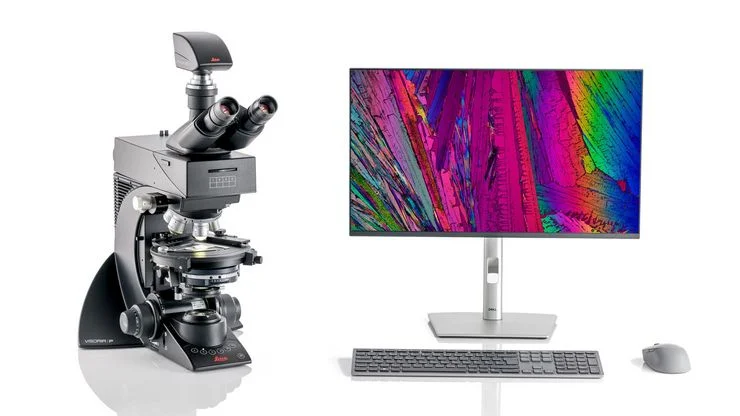
Visoria P is a polarization microscope designed to analyze the optical properties of birefringent materials such as minerals, rocks, coal, plastics, polymers, and other anisotropic samples using polarized light. It combines encoded illumination management, advanced contrast methods (brightfield, polarization, DIC, fluorescence), and optional digital configurations with a 10‑inch screen and Enersight integration to streamline daily workflows in geosciences, materials science, and industrial QA.
Technical Specification of Visoria P Polarization Microscope
Industries We Serve
Visoria P supports reliable polarized‑light analysis in education, research, and demanding industrial environments.
Key Features and Benefits of Visoria P Polarization Microscope
Illumination automatically adjusts when you change magnification or contrast mode, reducing manual brightness corrections and saving time.
- Quick functions such as Brightness and shading correction optimize image quality with one action.
- Consistent light settings help different users obtain comparable images.
Visoria P supports qualitative and quantitative polarization in transmitted and reflected light, plus Bertrand lens modules for conoscopy.
- Analyze birefringent samples such as minerals, rocks, coal, plastics, and polymers.
- Use compensators and interference figures to evaluate crystal orientation and internal stresses.
Digital Visoria P systems work with Flexacam cameras and Enersight software for capturing, measuring, and reporting directly from the microscope.
- Extended depth of field and image stitching create sharp, wide‑field composite images.
- Stored metadata makes illumination and objective settings easy to reproduce later.
The stand offers low‑effort focus and stage movement, illuminated control buttons, and ergonomic accessories such as ErgoTubes and ErgoLift.
- Users can maintain a relaxed posture during long petrography or materials‑testing sessions.
- Image capture directly from the stand or on‑screen controls keeps attention on the sample.
Visoria P combines multiple contrast techniques and specialized objectives so one platform can cover geoscience and industrial QA tasks.
- Switch between brightfield, darkfield, phase, DIC, fluorescence, and polarization without changing microscopes.
- Use dedicated objectives for coal, asbestos, or other specific materials when required.
Applications and Usecases of Visoria P Polarization Microscope
Study mineral composition, texture, and microstructures in rock thin sections using transmitted‑light polarization and conoscopy.
- Identify minerals and grain boundaries based on birefringence colors, extinction angles, and interference figures.
- Evaluate rock fabric, deformation features, and metamorphic grade in research and teaching labs.
Use dedicated coal objectives and polarization contrast to characterize macerals, porosity, and reflectance in coal and sedimentary samples.
- Support classification of coal rank and quality for mining and power applications.
- Assess organic matter and microstructures in source‑rock and reservoir studies.
Inspect polymers, glass, and composite materials for stress patterns, orientation, and defects using reflected‑ and transmitted‑light polarization.
- Reveal internal stresses and flow lines in molded plastic parts or glass components.
- Check fiber orientation and bonding quality in reinforced composites and laminates.
Combine polarization, DIC, and brightfield to investigate cracks, inclusions, and phase distributions in industrial samples.
- Document defects and root causes with digital imaging, measurement, and reporting.
- Use consistent illumination settings to reproduce inspection conditions across shifts.
Apply polarized light and specialized objectives to identify asbestos types and other anisotropic fibers in environmental and occupational samples.
- Differentiate fiber species by color, extinction behavior, and refractive properties.
- Support regulatory testing and workplace safety assessments.
Use Visoria P in classrooms and training labs to teach polarized‑light microscopy and materials characterization.
- Show live images on monitors or projectors for group discussion and interactive learning.
- Build digital image libraries of reference samples for exams, standards, and remote teaching.
Frequently Asked Questions
Answers to common questions about Visoria P polarization microscopes, their configurations, and typical workflows.
Visoria P is a polarization microscope for analyzing birefringent materials such as minerals, rocks, coal, polymers, and glass using transmitted‑ and reflected‑light polarization.
The system can be configured for brightfield, darkfield, phase contrast, differential interference contrast (DIC), fluorescence, and polarization in transmitted and incident light.
Encoded light management automatically adapts illumination and diaphragm settings when you change objective or contrast mode, helping you get consistent images with fewer manual adjustments.
Yes. Dedicated Bertrand lens modules enable conoscopic observation of interference figures for crystal‑orientation and stress analysis.
Visoria P can be combined with Flexacam cameras and Enersight software, or supplied as a digital system with an integrated 10‑inch screen for stand‑alone imaging, measurement, and reporting.
Typical fields include geosciences and petrography, coal and sedimentology, polymer and glass inspection, industrial QA and failure analysis, asbestos and fiber identification, and university teaching labs.
Yes. Digital configurations make it easy to display live images on monitors or projectors so groups of students can follow along during demonstrations and exercises.
Accessories such as ErgoTubes, ErgoLift, and height‑adjustable focus drives help users maintain a comfortable posture during long analysis sessions.
Many configurations allow later addition of DIC, fluorescence modules, Bertrand lenses, compensators, or camera solutions, so the system can grow with your applications.
With exchangeable stages and a 75 × 50 mm scanning stage, Visoria P can handle standard petrographic thin sections, polished blocks, filters, and a wide range of industrial mounts and slides.